
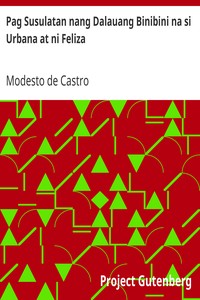
Pag Susulatan nang Dalauang Binibini na si Urbana at ni Feliza by Modesto de Castro
Let's be clear: this isn't a novel with a plot in the way we think of it today. There's no chase scene or shocking betrayal. Instead, 'Pag Susulatan' is a series of 34 letters. Father Modesto de Castro wrote them all, using the voices of two fictional sisters. Urbana, the older sister, has moved to Manila for her education. Feliza remains in their provincial hometown. Through their correspondence, Urbana gives Feliza a complete education on how to live a proper, moral life.
The Story
The 'story' is the lesson plan. Urbana's letters cover everything. She instructs Feliza on respecting their parents absolutely, on being devout in her Catholic faith, and on managing the household. She goes into incredible detail: how to speak softly, how to walk gracefully, how to choose simple clothing, and how to interact with men (spoiler: very, very carefully). The goal is to mold Feliza into the paragon of a 'dalagang Filipina'—a modest, obedient, and skilled young woman who brings honor to her family. The drama lies in the weight of these expectations and the narrow path Feliza must walk.
Why You Should Read It
Reading this book is like finding a time capsule. It's not always comfortable—some advice feels incredibly restrictive by modern standards—but that's what makes it so powerful. You get a raw, unfiltered look at the social engine of the 1800s. It shows how values were passed down, especially to women. Beyond the rules, you can feel the genuine concern (or control, depending on your view) in Urbana's voice. It makes you think about where our own ideas of 'good behavior' come from. Is this just old-fashioned? Or do echoes of this 'ideal' still whisper in our families today?
Final Verdict
This book is perfect for anyone interested in the roots of Filipino culture, for readers who love primary historical sources, and for those curious about the history of women and family life. It's not a light beach read, but it is a compelling piece of social history dressed up as a family drama. If you want to understand the Philippines' past on a personal, human level, start with this conversation between two sisters.
This book is widely considered to be in the public domain. You can copy, modify, and distribute it freely.
Noah King
2 years agoAs someone who reads a lot, the narrative structure is incredibly compelling. A true masterpiece.
Robert Gonzalez
1 year agoCompatible with my e-reader, thanks.




Joseph Perez
6 months agoI didn't expect much, but the clarity of the writing makes this accessible. Definitely a 5-star read.