
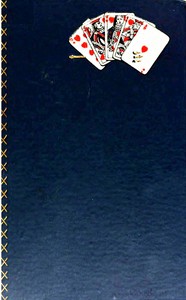
The Devil's picture-books by Mrs. John King Van Rensselaer
Published in 1890, The Devil's Picture-Books is exactly what its title promises: a tour through the shadowy, symbolic past of playing cards. Mrs. Van Rensselaer, writing with the confidence of a seasoned researcher, presents her case not as dry scholarship, but as a series of connected revelations. She walks us through the standard 52-card deck, suit by suit and face card by face card, peeling back the layers.
The Story
There isn't a narrative plot with characters. Instead, the 'story' is the author's detective work. She starts with a simple question: where did these designs come from? From there, she embarks on a global hunt. She traces the four suits (hearts, diamonds, clubs, spades) back to ancient representations of the four elements—water, fire, earth, air—and links them to the chalice, sword, pentacle, and wand of the Tarot. The King, Queen, and Jack aren't just royalty; she sees in them the medieval estates of nobility, clergy, and peasantry, or sometimes figures from myth. The book is her evidence file, packed with comparisons to heraldry, religious iconography, and folklore, all aimed at proving that our playing cards are a 'picture-book' of ideas that authorities once considered dangerous or pagan.
Why You Should Read It
What makes this book a joy is the author's voice. She's passionate and slightly combative, daring you to disagree with her connections. Reading it feels like having a brilliant, slightly eccentric friend point out secret patterns in the world you've overlooked. It’s less about whether every one of her historical links is airtight by modern standards (some are debated), and more about the thrill of the hunt. She makes you look at a mundane deck of Bicycle cards and see the ghosts of alchemy, astrology, and old power structures. It’s a masterclass in finding meaning in the everyday.
Final Verdict
This is a gem for anyone who loves hidden history, symbolism, or just a good intellectual puzzle. It's perfect for a reader who enjoys books like The Dictionary of Symbolism or the works of Joseph Campbell, but in a bite-sized, conversational package. If you're a game designer, an artist looking for inspiration, or simply someone who enjoys a 'big idea' book that you can read in a couple of sittings, pick this up. Just be warned: you'll never play Go Fish the same way again.
This is a copyright-free edition. Feel free to use it for personal or commercial purposes.
Richard Miller
1 year agoSolid story.
Margaret Jackson
1 year agoRecommended.
Edward Thomas
1 year agoI didn't expect much, but the content flows smoothly from one chapter to the next. A true masterpiece.
Steven Thomas
2 years agoVery interesting perspective.








Michael Jones
11 months agoHigh quality edition, very readable.