
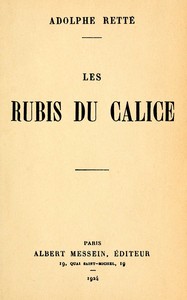
Les rubis du calice by Adolphe Retté
Adolphe Retté's Les rubis du calice is a semi-autobiographical novel that reads like a secret journal you weren't supposed to find. Published in 1890, it drops us right into the spiritual and artistic whirlwind of fin-de-siècle Paris.
The Story
The book follows Paul, a young man deeply committed to his Catholic faith. He wants purity, devotion, and a life centered on God. But he's also an artist living in Montmartre, surrounded by poets, painters, and a culture that celebrates beauty, sensation, and sometimes outright decadence. The 'rubies' of the title are a powerful symbol: they represent both the precious blood of Christ in the sacred chalice and the glittering, dangerous allure of worldly passions. The story is Paul's internal battle. We see him at mass, then at a raucous café. He writes prayers, then is captivated by a beautiful woman or a provocative idea. It's a cycle of longing, sin, guilt, and desperate seeking for grace.
Why You Should Read It
Forget stuffy religious tales. What grabbed me was how honest and human Paul's struggle feels. Retté doesn't give us a saint or a villain; he gives us a confused young man. The writing is lush and sensory—you can almost smell the incense and the absinthe. It perfectly captures that late-19th-century mood where art was a religion and spirituality was often an aesthetic experience. You're not just reading about his conflict; you're feeling the dizzying pull of both worlds right alongside him. It's a fascinating snapshot of a very specific time, but the core dilemma—how to live in the world without being completely of it—is timeless.
Final Verdict
This book is a niche pick, but a rewarding one. It's perfect for readers who love historical atmosphere and psychological depth over fast-paced action. If you're interested in the Symbolist movement, Catholic literature, or just compelling stories about faith and doubt, give it a look. It's not a light read, but it's a short and intense one. Think of it as a deeply personal postcard from the spiritual crisis of the 1890s. You might not always agree with Paul, but you'll understand him.
No rights are reserved for this publication. You are welcome to share this with anyone.
Steven Wright
9 months agoHigh quality edition, very readable.
Paul Hernandez
1 year agoA must-have for anyone studying this subject.
Robert Robinson
8 months agoRecommended.
Margaret Brown
1 year agoSimply put, the pacing is just right, keeping you engaged. I would gladly recommend this title.





George Thomas
1 year agoI was skeptical at first, but it creates a vivid world that you simply do not want to leave. Don't hesitate to start reading.