
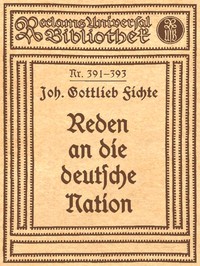
Reden an die deutsche Nation by Johann Gottlieb Fichte
Let's set the scene. It's the winter of 1807-1808 in Berlin. The city is under French occupation after Napoleon's decisive victories. The Holy Roman Empire is gone. For many, German identity feels like it's shattered. Into this atmosphere of defeat walks Johann Gottlieb Fichte, a famous but controversial philosopher. Every Sunday, he steps onto a stage and delivers a lecture. Not on abstract metaphysics, but on the urgent crisis facing his audience. This series becomes 'Addresses to the German Nation.'
The Story
There isn't a plot in the novel sense. Think of it as a fourteen-chapter argument, a live performance of ideas. Fichte starts from a place of deep humiliation. He says the old Germany failed because it was selfish and materialistic. But here's his twist: this collapse is actually an opportunity. It's a chance to build something new from the ground up. The core of his plan is radical education. He imagines a national schooling system that wouldn't just teach facts, but would mold character and instill a love for the German language and community. For Fichte, a nation isn't just a state; it's a spiritual entity held together by a common culture and a shared mission. These lectures were his attempt to define that mission and ignite that spirit.
Why You Should Read It
This book is a trip inside the mind of a nation being reborn. It's incredibly powerful to see how ideas can be used as tools for survival. Fichte's passion is palpable; you can almost hear his voice rising in the hall. However, it's also a deeply uncomfortable read at times. His intense focus on German uniqueness and his call for a unifying national spirit were later twisted by others for terrible purposes. Reading it forces you to wrestle with a big question: Can a beautiful, empowering idea of community become dangerous? Seeing that tension right here at the idea's source is chilling and vital.
Final Verdict
This isn't a casual read. It's for the intellectually curious. Perfect for history buffs who want to understand the intellectual roots of German nationalism, or for philosophy readers interested in how ideas play out in the real world of politics and crisis. If you've ever wondered how a group of people decides 'who we are' after a great trauma, Fichte's desperate, brilliant, and flawed blueprint is an essential, challenging document. Approach it not as absolute truth, but as a historic conversation starter of monumental importance.
This text is dedicated to the public domain. It is now common property for all to enjoy.
Michelle Walker
1 year agoGreat read!
Ava Jackson
4 months agoGreat read!
Andrew Harris
1 year agoThe index links actually work, which is rare!
Sarah Perez
1 year agoBased on the summary, I decided to read it and the arguments are well-supported by credible references. A valuable addition to my collection.





Patricia Taylor
1 year agoRecommended.