
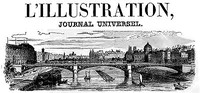
L'Illustration, No. 0003, 18 Mars 1843 by Various
Okay, let's be clear: this isn't a book with a plot in the traditional sense. L'Illustration, No. 0003, 18 Mars 1843 is a single, 16-page issue of a groundbreaking French periodical. Think of it as a weekly magazine from 1843, delivered straight to your hands. There's no single narrative. Instead, you flip through a curated collection of the week's events, ideas, and curiosities.
The Story
The 'story' is the week of March 18, 1843, as told to the French reading public. It's a mosaic. You might start with a political report from the Chamber of Deputies, then move to a detailed engraving and description of a new industrial machine. There are society pages noting who attended which ball, literary reviews of new plays, and somber accounts of accidents or crimes. Advertisements for everything from patent medicines to books sit alongside scientific discoveries. The through-line is the editors' attempt to capture their entire world—the serious, the frivolous, the tragic, and the innovative—in one package.
Why You Should Read It
I loved this because it removes all the filters. History books tell us *about* 1843; this issue lets you *inhabit* it for an hour. The perspective is completely unselfconscious. The writers aren't trying to explain their era to future generations; they're explaining it to their neighbors. You see their priorities, their biases, and their sense of wonder. The detailed woodcut illustrations are a revelation—they were the 'photography' of their day, and studying them feels like detective work. You realize how much of life was local and slow, yet how feverishly people were chasing progress through railroads, factories, and new ideas.
Final Verdict
Perfect for history lovers who are tired of textbooks, for writers seeking authentic period detail, or for anyone with a curiosity about how people lived their daily lives. If you enjoy museums, archives, or the feeling of finding an old letter in the attic, you'll be captivated. It's not a page-turner; it's a time machine. Just be ready to read slowly, look closely, and let your imagination fill in the gaps between the lines of type and the fine lines of the engravings.
This publication is available for unrestricted use. Enjoy reading and sharing without restrictions.
Ethan Garcia
1 year agoWow.
Emily Taylor
1 year agoHaving read this twice, the arguments are well-supported by credible references. One of the best books I've read this year.



James Moore
11 months agoFinally a version with clear text and no errors.