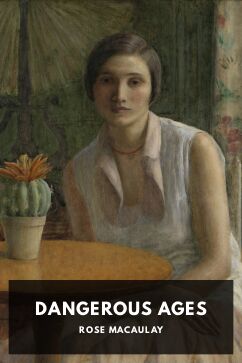
Dangerous Ages - Rose Macaulay
Rose Macaulay's 'Dangerous Ages' is a book that sneaks up on you. Published in 1921, it doesn't roar with the jazz-age rebellion of its time. Instead, it hums with a quieter, more persistent truth about the lives of women.
The Story
The novel follows Neville, a forty-three-year-old mother whose life of comfortable domesticity unravels when her youngest child leaves for school. Suddenly, the house is empty, and so is her sense of purpose. We see her world through the lens of her family: her mother, struggling with aging and lost independence; her grandmother, facing mortality with a mix of fear and grace; and her younger sister, a doctor wrestling with the choice between career and marriage. There's no grand plot twist or dramatic event. The drama is internal, built from the small, crushing moments where each woman confronts the gap between who she is and who she thought she'd be.
Why You Should Read It
What makes this book so special is Macaulay's voice. She's funny without being cruel, and deeply insightful without being sentimental. She lays bare the specific loneliness that can come even from a life that looks full from the outside. You'll recognize these women. You might be one of these women. The 'dangerous ages' aren't just about getting older—they're about those transitions where the old rules don't apply anymore, and you have to figure out the new ones on your own. It's a book about time, regret, and the quiet courage it takes to rebuild a sense of self.
Final Verdict
This is a perfect read for anyone who loves character-driven stories that feel real. If you're a fan of authors like Penelope Lively or Anne Tyler, who explore family dynamics with warmth and wit, you'll find a kindred spirit in Macaulay. It's also a fascinating slice of social history, showing the early rumblings of the changes that would reshape women's lives in the 20th century. Don't go in expecting a fast-paced plot. Go in ready to meet some unforgettable characters and see your own life reflected in their struggles. It's a quiet masterpiece that deserves a much wider audience.
This publication is available for unrestricted use. Thank you for supporting open literature.