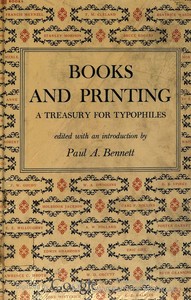
Books and Printing; a Treasury for Typophiles by Paul A. Bennett
Forget everything you know about typical book plots. Books and Printing; a Treasury for Typophiles isn't a novel with a beginning, middle, and end. Instead, imagine a curated museum exhibit for your bookshelf. Edited by Paul A. Bennett, this book is a collection of writings from various experts in the field of printing and typography. It gathers essays, historical accounts, and technical notes that together tell the story of how books are made.
The Story
The 'story' here is the evolution of an art form. The book walks you through the journey of printing, from the craftsmanship of early presses to the design principles that make text readable and beautiful. It's filled with discussions on typeface design, the quality of paper and ink, and the thoughtful layout of a page. You'll read about the people behind famous fonts and the practical challenges printers faced. It connects the dots between the physical object in your hands and centuries of innovation and taste.
Why You Should Read It
I picked this up because I'm a book lover, and it completely changed how I see the books on my shelf. It's not dry or academic in a boring way; it's filled with genuine passion. You start to notice the curve of a letter, the spacing between lines, and the feel of the paper. It gives you a new language to appreciate the everyday art of reading. The collection format is perfect—you can dip in and out, discovering little fascinating facts about the Gutenberg Bible or why certain fonts became classics. It makes you feel like an insider in a club you didn't know existed.
Final Verdict
This book is a treat for a specific but broad audience. It's perfect for curious readers, designers, history fans, or anyone who has ever said 'I love the smell of old books.' If you enjoy podcasts or shows about how everyday things are made, you'll love this. It's not a quick thriller, but a slow, rewarding read that adds depth to your world. Keep it on your nightstand and read a section at a time. You'll never look at a page the same way again.
You are viewing a work that belongs to the global public domain. You do not need permission to reproduce this work.